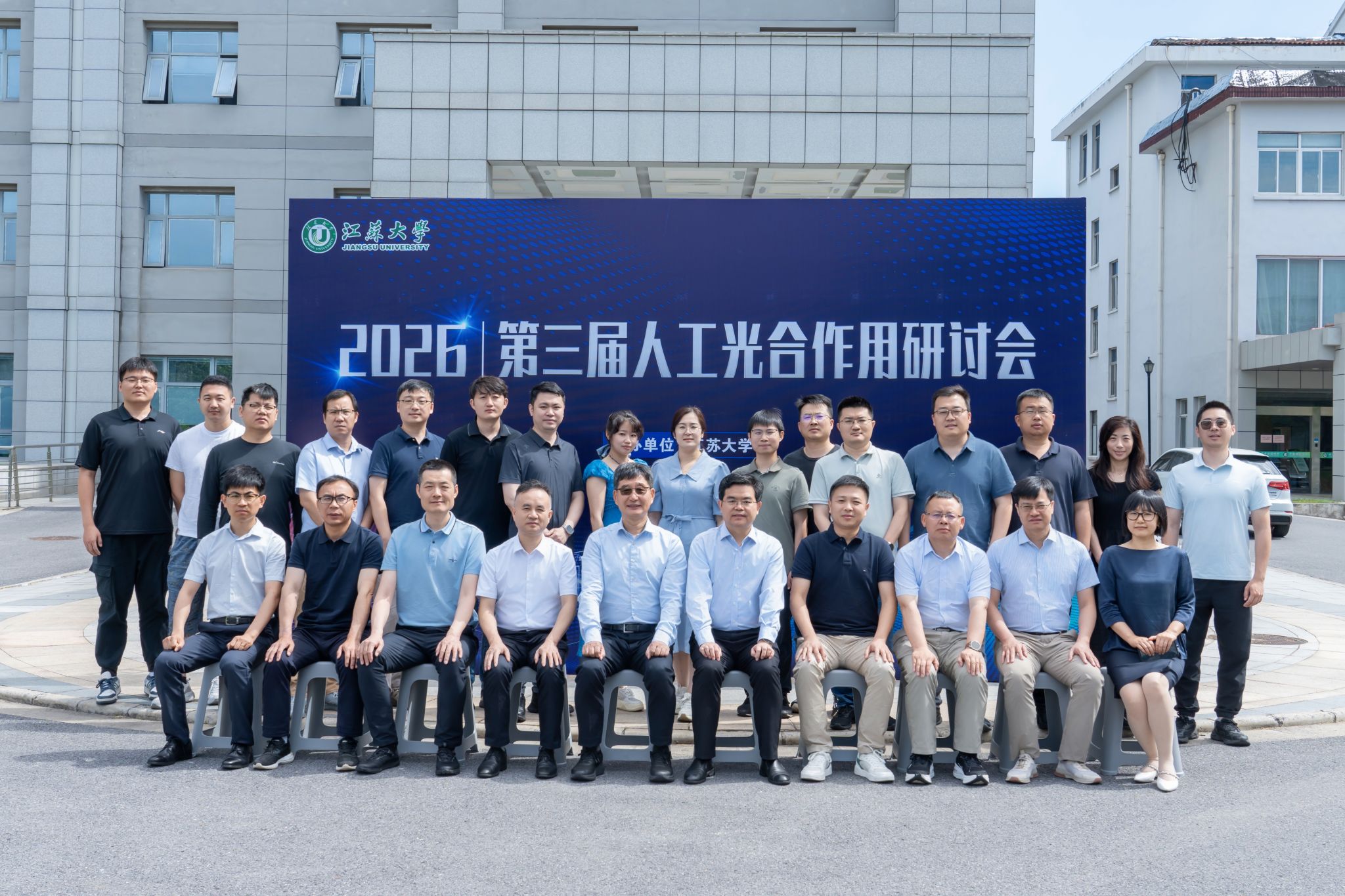
On June 6, the Third Symposium on Artificial Photosynthesis was ceremoniously held at the lecture hall of the Young Teachers Apartment of Jiangsu University. The symposium was hosted by the Center for Artificial Photosynthesis and Solar Fuels and the School of Science, Westlake University, and undertaken by the Institute for Energy Research of Jiangsu University. Aiming to bring together top expertise and jointly explore the frontiers of new energy, the conference contributed academic strength to advancing the green and low-carbon development of China. Hongbo Li, Party Secretary of Jiangsu University, Licheng Sun , Academician of the Chinese Academy of Sciences, and Xiaobin Zhang, Vice President of Hunan University, together with invited experts from Dalian University of Technology, the National University of Singapore, the Shanghai Institute of Ceramics, Wuhan University of Science and Technology, the Qingdao Institute of Bioenergy and Bioprocess Technology, and other institutions, attended the conference. The symposium was presided over by Professor Ming Cheng , Vice Dean of the Institute for Energy Research.
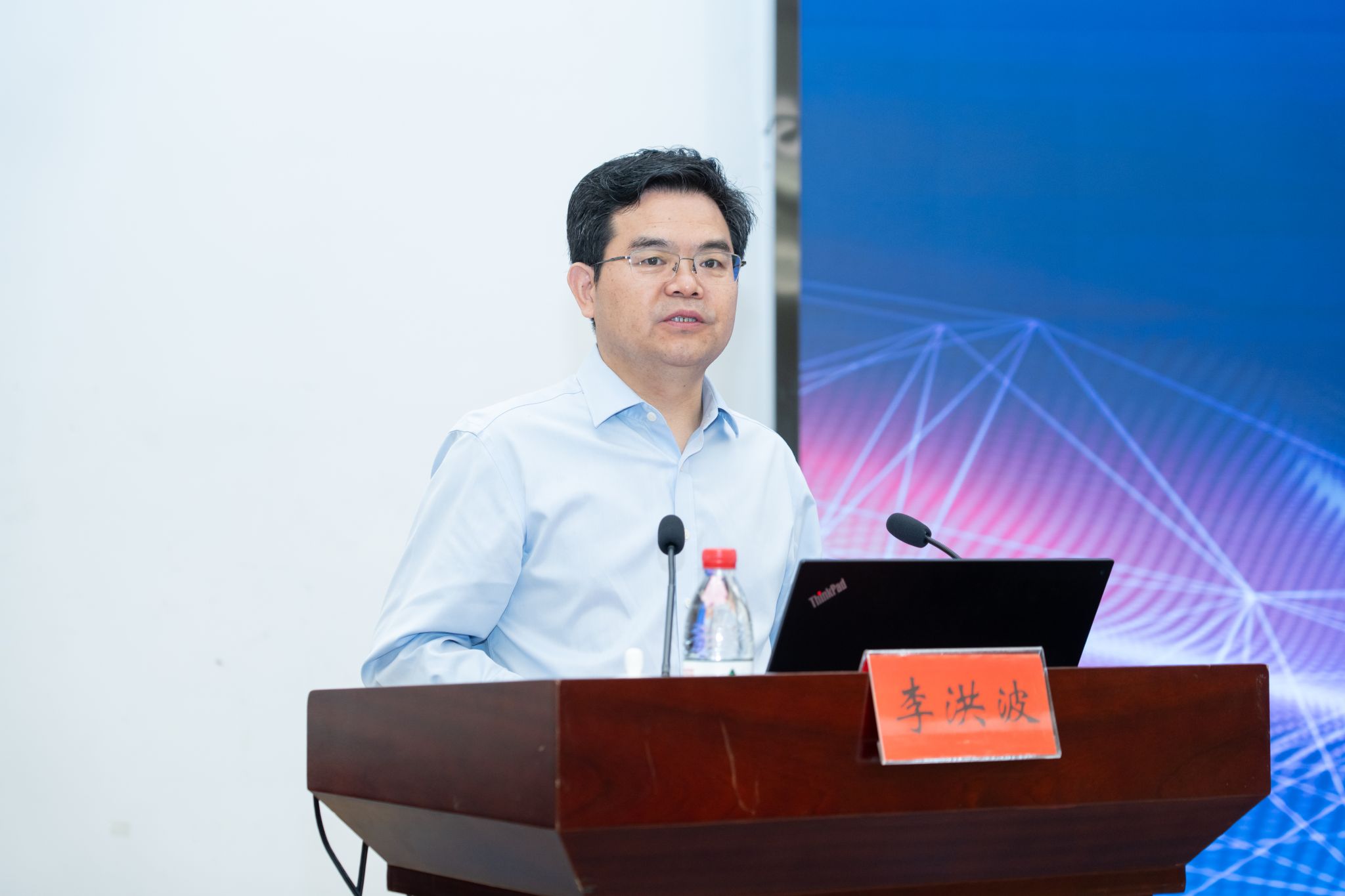
At the opening ceremony, Secretary Hongbo Li delivered a welcome address on behalf of Jiangsu University. He first extended a warm welcome to the attending guests and, on behalf of the University, expressed the warmest welcome to all experts and scholars present, especially Academician Sun Licheng from Westlake University and President Zhang Xiaobin from Hunan University. Li Hongbo pointed out that China is now in a critical period of vigorously advancing the "dual carbon" strategy; strengthening original innovation and technological breakthroughs in artificial photosynthesis and the resource utilization of carbon dioxide, and promoting the deep cross-disciplinary integration of energy and power engineering, chemistry, materials science and artificial intelligence, have become urgent needs for achieving high-level scientific and technological self-reliance in the new energy field. He noted that the University attaches great importance to the development of artificial photosynthesis and related interdisciplinary fields, and looks forward to taking this conference as an opportunity to further deepen interdisciplinary integration and academic exchanges. He wished the symposium a complete success.
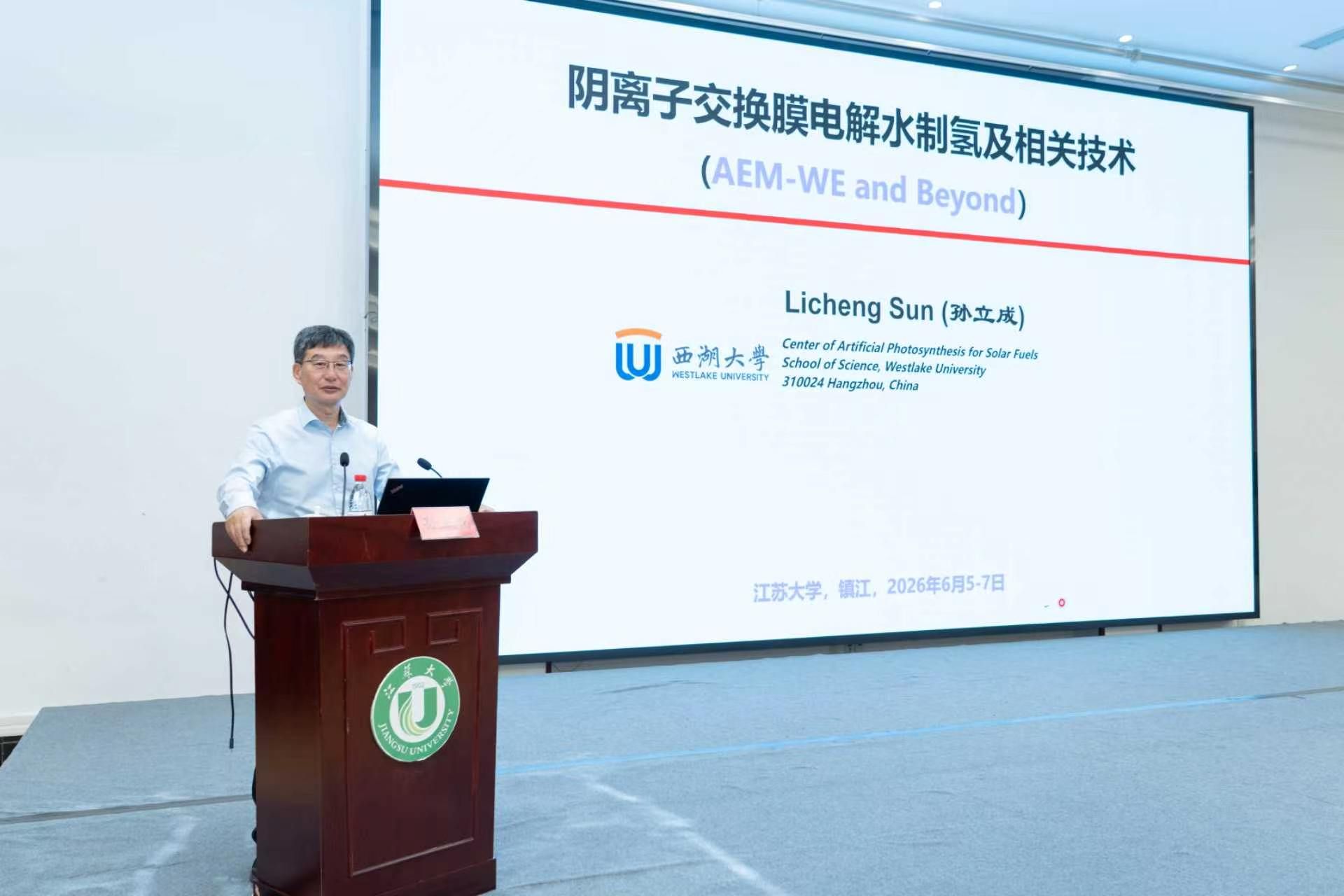
In the plenary report session, Professor Licheng Sun, Academician of the Chinese Academy of Sciences from Westlake University, delivered a report entitled "Catalytic Water Splitting and Green Fuels." From a strategic and forward-looking perspective, he shared insights from basic research at the scientific frontiers of solar fuels and solar cells, and provided an in-depth analysis of the bottleneck application technologies currently facing the field. His report covered core topics including the design and synthesis of high-efficiency water-splitting catalysts, the development of anion-exchange membranes, the development of large-scale electrolytic hydrogen production modules, CO2 reduction in (photo)electrochemical-biological hybrid systems, cofactor NADH regeneration and fine chemical synthesis, as well as theoretical calculations of water-splitting catalysis. He called on the academic community to work together to strive for building "a new technological system for human society dominated by solar energy."
In the thematic report session, a number of experts and scholars held in-depth discussions around the key technical bottlenecks in artificial photosynthesis.
Professor Hou Jungang from Dalian University of Technology, a recipient of the Youth Fund Class A, delivered a report entitled "From Photoelectrocatalytic Water Oxidation to High-Value Chemical Exploration." Addressing the drawback of the relatively low economic value of conventional anodic products, he shared the latest explorations in photoelectrocatalytic water oxidation for hydrogen peroxide production, selective oxidation of organics, and oxidative degradation of organic pollutants. He proposed that enhancing the added value of products or accelerating reaction rates can effectively improve the practical applicability of photoelectrocatalytic systems, which carries important practical significance for promoting the green synthesis of chemicals and carbon neutrality.
Professor Wang Lei from the National University of Singapore gave an in-depth report on "New Technologies and Methods for Carbon Dioxide Conversion." Combining cutting-edge high-end characterization techniques, he systematically analyzed the new material synthesis and interfacial charge-transport mechanisms in the electrocatalytic CO2 reduction coupled with water oxidation process, and shared a series of procedures for PEM device fabrication, providing new ideas for the efficient conversion and utilization of carbon dioxide.
Professor Qin Peng from the Shanghai Institute of Ceramics delivered a report entitled "Perovskite Structural Design and Its Application in Solar Energy Conversion and Storage Devices," focusing on the forward-looking exploration of high-efficiency solar energy conversion and storage materials. Centering on key scientific issues such as "maximizing photogenerated carrier generation, transport and collection," he elaborated in detail how semiconductor structural design strategies can be used to break through the performance bottlenecks of photoelectric conversion devices.
Professor Fan Ke from Wuhan University of Science and Technology presented a report entitled "Reconstruction of Oxygen Vacancies in Electrocatalytic Water Splitting." He emphasized the important effects of oxygen vacancy regulation on oxidation and reduction reactions, and analyzed in depth the key role and reconstruction mechanism of oxygen vacancies in semiconductor nanomaterials during electrocatalytic water splitting, providing theoretical support for the optimal design of catalytic materials.
Professor Zhang Biaobiao from Westlake University shared his research insights on "the Development of High-Efficiency Water Oxidation and Ammonia Oxidation Electrocatalysts." He conducted a comprehensive and profound discussion of the key materials and scientific issues involved in water oxidation catalyst and water electrolysis technology development, mechanism elucidation of ammonia oxidation catalysts, and the design and assembly of electrocatalytic CO2 reduction for liquid fuels and artificial photosynthesis devices.
Professor Jiang Xiaoqing from the Energy Research Institute of the Chinese Academy of Sciences delivered an insightful report on "Molecular Engineering Strategies for Constructing Efficient and Stable Perovskite Solar Cells." Focusing on dimensions such as the properties of hole-transport materials, perovskite crystallization control, and interfacial defect passivation by functional molecules, he systematically elaborated several effective strategies for improving the stability of perovskite solar cells.
Focusing on frontier technologies in artificial photosynthesis, this conference deepened interdisciplinary cross-integration and consolidated the consensus on promoting the development of green energy and carbon neutrality technologies. Faculty and students from the Institute of Energy Research, the School of Energy and Power Engineering, the School of Automobile and Traffic Engineering, and the School of Chemistry and Chemical Engineering attended the meeting. The participating faculty and students listened attentively, engaged in active exchanges, and the atmosphere on site was warm.